

Core Web Vitals: The Complete Technical Checklist
Executive Summary
Core Web Vitals are not performance metrics—they are operational thresholds that determine whether your system is perceived as precise or unreliable. For high-performance digital environments, they are the baseline constraints that separate engineered experiences from decorative interfaces.
The Three Core Web Vitals: A Systems Perspective
Each metric represents a failure mode. Together, they define whether your interface behaves like a controlled system or an unpredictable surface.
Largest Contentful Paint (LCP): Perceived Load Speed
LCP measures how long it takes for the largest visible content element to render within the viewport. Target: ≤ 2.5 seconds. A slow LCP creates immediate doubt; the user clicked with intent, and the system hesitated. Failure is often caused by render-blocking CSS, unoptimized media, or slow TTFB.

Interaction to Next Paint (INP): Responsiveness Under Pressure
INP measures the latency of user interactions and how quickly the interface visually responds. Target: ≤ 200 milliseconds. This is where most systems quietly fail—the page loads but feels unresponsive. It requires thread availability and the elimination of long main-thread tasks.
Cumulative Layout Shift (CLS): Visual Stability
CLS measures unexpected layout shifts. Target: ≤ 0.1. Layout instability creates a perception of fragility. It is a design failure disguised as a technical issue; stability must be intentional at the layout level, achieved through explicit dimensions and reserved space.
The Complete Technical Checklist
Server & Infrastructure Layer
- ▸Reduce Time to First Byte (TTFB) via edge-first architecture
- ▸Deploy persistent connections (HTTP/3) and enable TLS 1.3
- ▸Implement intelligent stale-while-revalidate caching strategies
- ▸Optimize DNS lookup times and use preconnect for critical origins
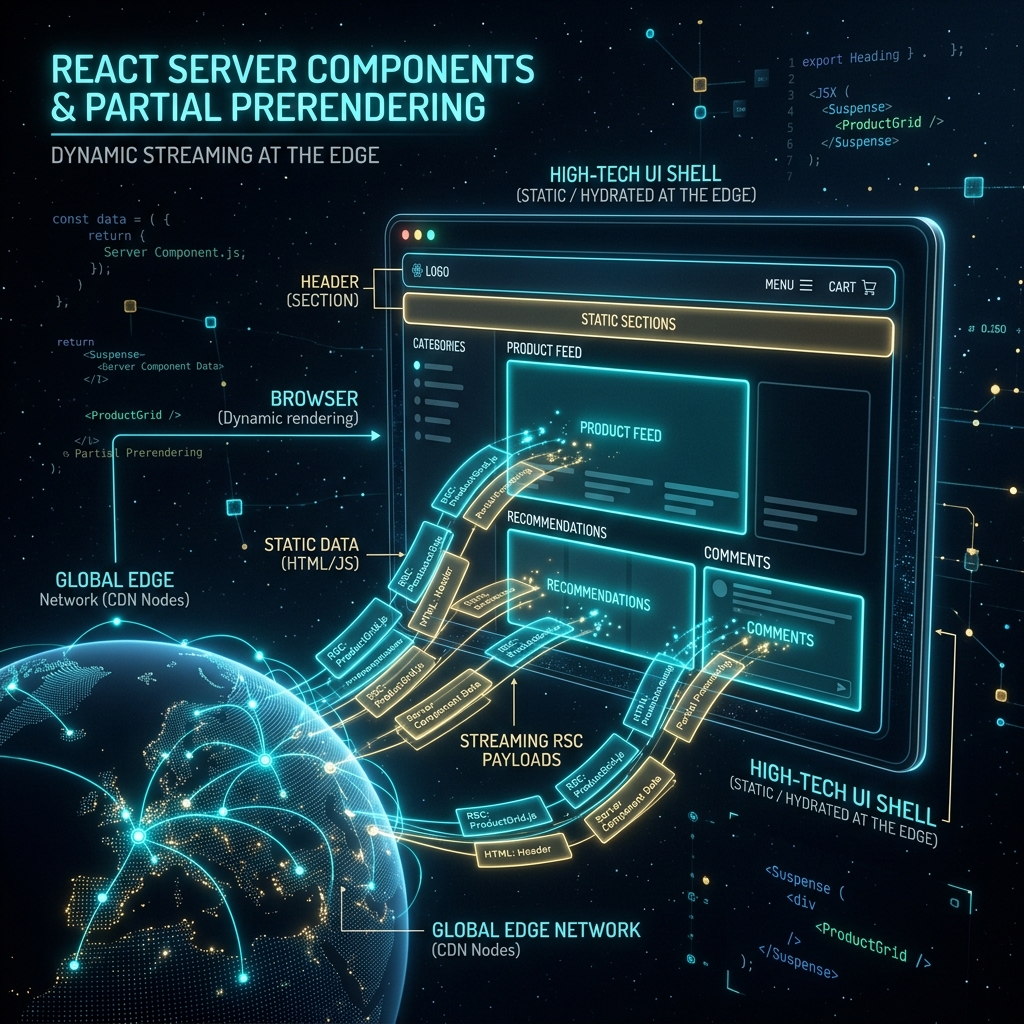
Rendering & Front-End Architecture
- ▸Minimize the critical rendering path by inlining critical CSS
- ▸Split code into smaller chunks and use dynamic imports
- ▸Break long JavaScript tasks (>50ms) to ensure thread availability
- ▸Use font-display: swap and preload critical typography
Layout Stability (CLS Control)
- ▸Define explicit width and height for all images and embeds
- ▸Use aspect-ratio CSS for responsive media containers
- ▸Allocate fixed containers for dynamic content (ads, banners)
- ▸Use skeleton loaders to maintain structural integrity during load

Conclusion: Performance is Structural, Not Cosmetic
Core Web Vitals expose the truth of your system. High-performance digital environments do not chase metrics; they engineer systems that naturally satisfy them. The checklist is not a set of optimizations—it is a blueprint for operational precision. In the EVDOPES model, performance is the foundation upon which trust and brand authority are built.

