PlanetScale مقابل Supabase: مواجهة قواعد البيانات بدون خادم
Executive Summary
Estimated Read Time: 15 minutes PlanetScale and Supabase solve adjacent problems, but they are not interchangeable. One is a database operations platform engineered around controlled schema change, scale, and operational discipline; the other is a Postgres development platform that wraps database, auth, APIs, storage, realtime, and edge compute into a unified stack.
The comparison is real, but the architecture is not symmetrical
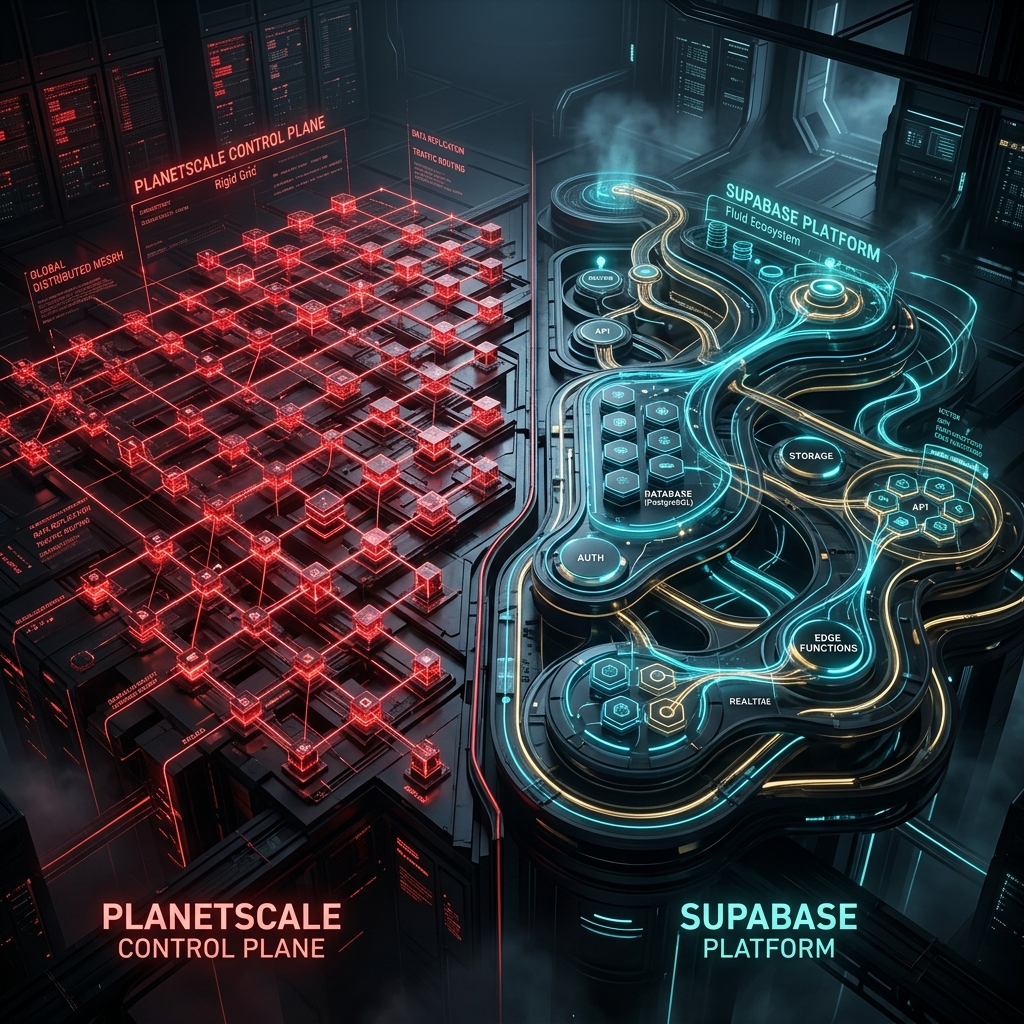
The phrase “serverless database” is often used loosely, and that imprecision causes bad decisions. PlanetScale and Supabase both remove a great deal of operational burden, but they do so with different philosophies, different primitives, and different trade-offs. PlanetScale’s platform is built around database-first control, with branching, deploy requests, query insights, sharding, and online schema operations at the center of the experience. Supabase begins with Postgres and expands outward into the rest of the application stack through authentication, realtime, storage, APIs, and edge functions.
For teams evaluating infrastructure under pressure, the real question is not “Which one is better?” It is “Which operating model fits the product, the team, and the failure modes we are willing to accept?” That distinction matters more than brand familiarity.
What PlanetScale actually is
PlanetScale is an opinionated database platform that supports both Vitess/MySQL and Postgres. Its core identity is operational control: zero-downtime schema changes, rollback capability, branching, query observability, and horizontal scaling workflows designed to reduce human error. The platform also exposes sharding workflows for massive scale, and PlanetScale’s current material explicitly describes high availability, edge routing, and structured deployment workflows as first-class features.
That matters because PlanetScale is not trying to be an all-purpose backend platform. It is trying to be a highly managed database layer with strong operational ergonomics. If the database is the center of your system, PlanetScale is built to make that center harder to break.
What Supabase actually is
Supabase is the Postgres development platform. Every project includes a full Postgres database with postgres-level access, and Supabase extends that database with realtime functionality, managed backups, extensions, REST and GraphQL data APIs, authentication, storage, vector embeddings, and edge functions.
That makes Supabase materially broader than a database service. It is a platform for building application backends around Postgres, with the database at the core and adjacent primitives layered around it. For product teams that want a fast path from schema to shipped product, that integration is the whole point.
The real difference: control plane versus application platform
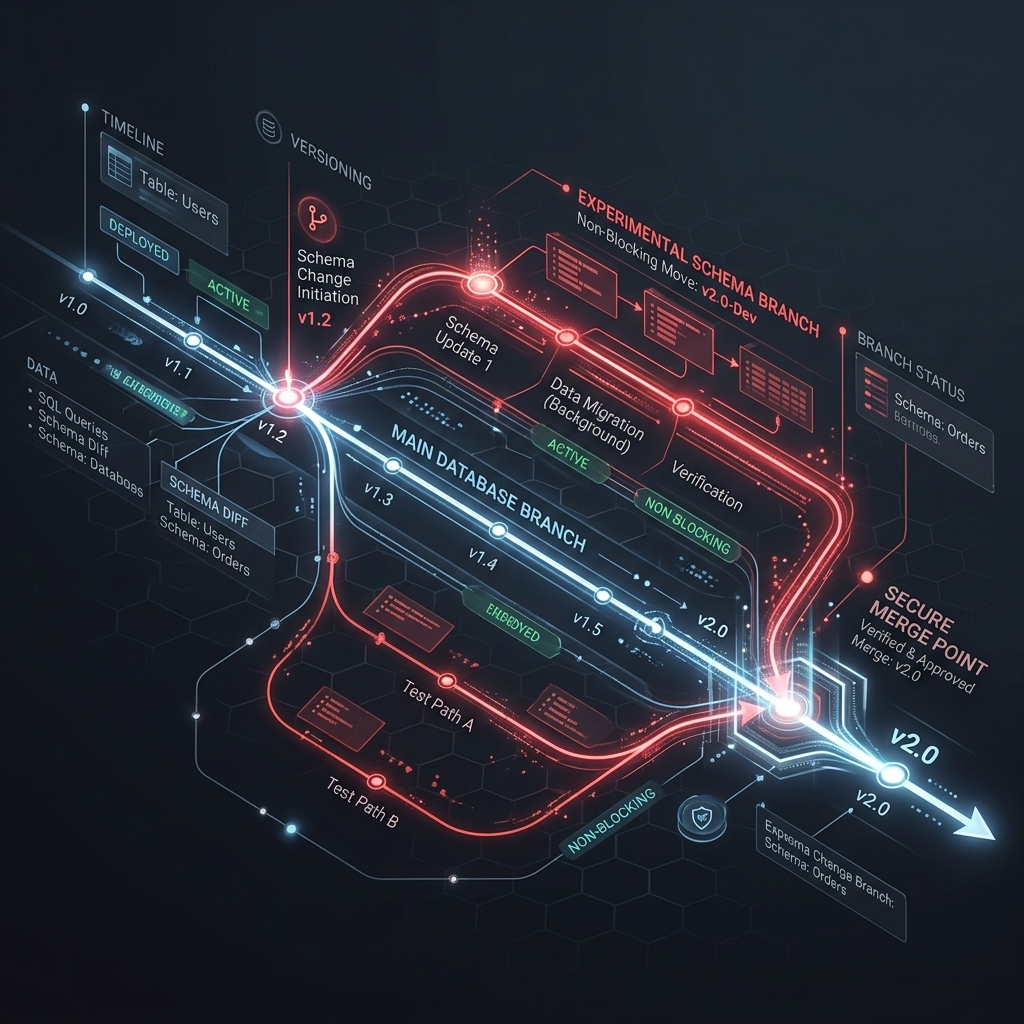
PlanetScale is strongest when your priority is database architecture under discipline: branching, deploy requests, non-blocking schema changes, rollback, and scale management. Its deploy request workflow is specifically designed so schema changes can be reviewed and deployed without downtime, and its docs describe database branching as the mechanism that enables those deploys.
Supabase is strongest when your priority is a cohesive application platform around Postgres. Its database integrates cleanly with REST or GraphQL APIs, Row Level Security, realtime subscriptions, and edge functions that are globally distributed TypeScript functions running close to users. In practice, that reduces the number of external systems you need before you can build something complete.
Data model and relational behavior
Supabase is full Postgres with postgres-level access, extensions, and the relational features teams expect from PostgreSQL. Its docs make clear that you connect directly, through a pooler, or through Data APIs depending on workload shape, and that transaction pooling is intended for serverless or edge functions with transient connections.
PlanetScale’s classic workflow is centered on Vitess/MySQL compatibility, and its docs state that foreign key constraints are not enabled by default. That is not a minor implementation detail; it changes how teams model relationships, enforce integrity, and design ORM workflows. PlanetScale can support foreign keys, but the defaults and surrounding practices are deliberately more opinionated around operational scale than around traditional relational enforcement.
Serverless readiness is not the same thing as serverless identity
Supabase is explicitly designed to work with transient serverless clients. Its connection docs recommend transaction pooler mode for serverless or edge functions, and its Edge Functions docs describe globally distributed TypeScript functions with low-latency routing, local parity, and logging. That makes Supabase unusually coherent for modern jamstack, serverless, and edge-heavy architectures.
PlanetScale is serverless in a different sense: it abstracts away a large amount of database operations while preserving a strong database-centric control model. Its platform emphasizes online schema changes, revertable deployments, query insights, and automatic routing to local nodes on its global edge network. It is less about giving you a general-purpose backend substrate and more about making the database itself safer, faster, and easier to evolve.

Performance philosophy: speed through different mechanisms
PlanetScale’s performance story is built on database operations at scale: online changes, sharding workflows, query analysis, global routing, and high availability. Its current materials also emphasize multi-region reliability and a 99.999% SLA commitment for multi-region deployments, which signals a platform designed for serious production discipline.
Supabase’s performance story is more compositional. You get a managed Postgres core, plus pooling, APIs, and edge functions that reduce the need for auxiliary infrastructure. Supabase’s docs also note that dedicated pooling can improve performance and latency, while transaction pooling is aimed at serverless workloads with many short-lived connections.
Developer experience: what it feels like to build on each
PlanetScale feels like a database platform built for teams that already think in terms of schema safety, migration control, and operational boundaries. The deploy-request flow, branching model, and schema revert tooling are all engineered to reduce production risk when the database changes frequently.
Supabase feels like a backend platform built for teams that want to move from idea to working product with fewer pieces. The combination of database, auth, APIs, realtime, storage, and edge functions is especially attractive when the team wants one platform to cover a wide surface area without assembling every component separately.
Where PlanetScale wins
PlanetScale is the stronger choice when the database is the strategic asset and operational rigor is non-negotiable. If you care deeply about branch-based schema changes, rollback safety, query observability, and scale-aware database workflows, PlanetScale’s architecture is the more specialized instrument. It is especially compelling for teams with mature engineering culture, high traffic, or strict production standards around database change management. PlanetScale’s own platform language is built around reliability, online operations, and minimizing human error, which is exactly the posture enterprise infrastructure teams tend to value.
Where Supabase wins
Supabase wins when the bottleneck is product velocity and backend completeness. If you want Postgres plus auth, storage, realtime, APIs, and edge functions in one platform, Supabase compresses a significant amount of engineering work into a single system. It is also the more natural choice for teams that want strong Postgres semantics, straightforward app-layer integration, and first-party support for serverless and edge deployment patterns. Its transaction pooler, direct connection model, and API layer are explicitly documented for those environments.
The hidden trade-off: breadth versus specialization
PlanetScale optimizes for database excellence. Supabase optimizes for application acceleration. That single distinction explains nearly every practical difference between them. PlanetScale gives you more operational nuance around the database itself; Supabase gives you more of the surrounding product surface area required to ship a modern application.
This is why choosing between them is really a question about where you want complexity to live. PlanetScale externalizes much of the app stack but tightens control over database operations. Supabase internalizes more of the backend but asks you to accept a broader platform relationship. Neither is universally superior. The wrong one is simply the one that forces your team to fight its default shape.
| Dimension | PlanetScale | Supabase |
|---|---|---|
| Core Focus | Database Operations & Discipline | Application Acceleration & Breadth |
| Database Engine | MySQL (Vitess) / Postgres | PostgreSQL (Full access) |
| Schema Control | Branching & Deploy Requests | Native Postgres Migrations |
| Serverless Model | Edge Routing & Connectionless Access | Edge Functions & Transaction Pooling |
| Extended Services | Focus on Storage & Sharding | Auth, Storage, Realtime, Functions |
| Control Plane | Rollbacks & Online Operations | Unified Backend Management |
Practical decision framework
Use PlanetScale when the business depends on rigorous database change management, when scale and schema discipline are central risks, or when you want a platform built specifically around database operations rather than a broader backend suite. Its branching, deploy requests, query insights, and sharding workflows are the signals to look at.
Use Supabase when you want Postgres as the core of a broader development platform, especially if you need auth, realtime, storage, APIs, and edge functions in the same environment. Its pooler model, PostgreSQL access, and integrated application primitives make it a strong fit for teams that value shipping velocity and platform cohesion.
Conclusion: choose the architecture that matches the operating truth
PlanetScale and Supabase are both serious platforms, but they serve different kinds of seriousness. PlanetScale is for teams that want the database to behave like controlled infrastructure: observable, revertable, and disciplined under load. Supabase is for teams that want Postgres to become the center of a fast, integrated application platform without assembling every layer by hand.
The correct choice is not the one with the loudest community or the cleanest demo. It is the one whose defaults align with your team’s architecture, your operational tolerance, and your definition of speed. In high-performance systems, platform choice is never cosmetic. It is structural.